Showing posts with label Sedan. Show all posts

Tuesday, May 17, 2011

Jaguar XJL Super Sports Car


Jaguar XJL Super Sports Car

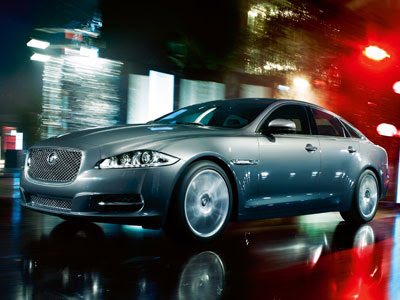
The New XJ offers a modern reinterpretation of a number of key XJ design cues while maintaining the highest standards of personal luxury. Jaguar XJL Super Sports Car
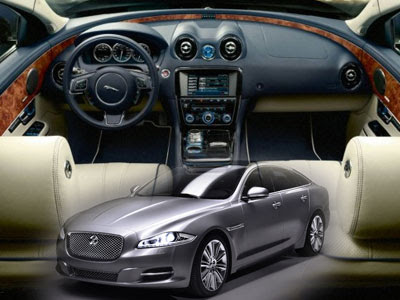
A standard panoramic glass roof is an integral part of the all new XJ's design, enabling the car to have a lower, more streamlined roofline, while dramatically enha
ncing the feeling of light and space inside. The LED light clusters wrap stylishly over the rear fenders, and feature three dramatic red vertical strips while the elongated teardrop shape of the side windows establishes the car's silhouette. The rear of the all new XJ is notable for its pure, sculpted shape. With a conscious absence of ornamentation, the rear features only a single leaping Jaguar.


The face of the all new XJ is confident, with a wide front track and short overhang contributing to the finely judged proportions. The nose of the car follows Jaguar's new design language with a bold and assertive treatment – the powerful mesh grille and slim xenon headlights create a strong road presence while the wrap-around rear screen reduces the visual weight of the pillars and gives the impression of an exotic 'floating' roof.
The sleek design and refined luxury is continued inside the all new XJ by mixing newly advanced technologies and contemporary design to create an environment more akin to a state-of-the-art living space than a car cabin. The overriding impression from the interior is a sense of personal space that is enhanced by the clean, simple form of the leather-wrapped instrument panel sitting low across the vehicle. At the center of the instrument panel is an analog clock with individual chrome chaplets, a spun metal face and iridescent blue background; a look inspired by luxury watches. Jaguar XJL Super Sports Car
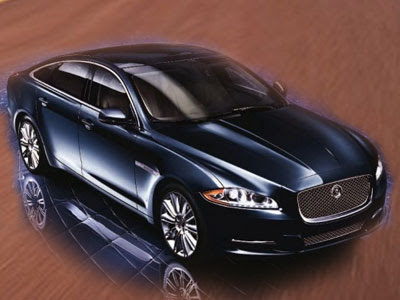
The all new XJ's cabin is a marvel in its own right, blending elegant, contemporary design with the comfort, luxury and unmistakable sporting style of a Jaguar. Chrome and piano black detailing provide an eye-catching contrast to the beautifully crafted leather and veneer surfaces. To further complement the cabin design is a level of choice in colors, veneers and leathers not seen before in a Jaguar. Four specification levels – XJ, XJL, Su
percharged and Supersport – allow the customer to tailor the car to suit their tastes. The top-of-the-range Supersport provides the ultimate expression of performance and luxury, with a specification that includes a leather headlining, semi-aniline leather seats and veneers with laser inlays.
Stunning, 12.3-inch high-definition Virtual InstrumentsTM complement an innovative 8-inch Touch-screen that displays vehicle functions ranging from audio and video to navigation and climate control. Premium surround sound options include the top-of-the-range 1200W Bowers & Wilkins system, which is standard on the Supercharged and Supersport models. Advanced infotainment features also include hard drive-based audio and navigation systems, and comprehensive connectivity for portable audio and video devices via the powerful Media Hub.
With the XJ, Jaguar has built upon its leading quality performance using the latest virtual product technologies. These proven Jaguar dynamic technologies are taken to new levels in the all new XJ. Features such as air suspension, Adaptive Dynamics (continuously variable damping), Active Differential Control (on Supercharged and Supersport) and quick-ratio power steering deliver the blend of responsive, dynamic handling and a refined, supple ride expected from a Jaguar. Jaguar XJL Super Sports Car
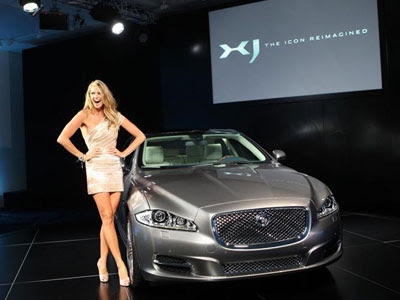
The new XJ will be available in the US with a choice of three engines – a 5.0 liter 385hp naturally aspirated V8, 5.0 liter 470hp supercharged V8 and a 5.0 liter 510hp supercharged V8. In naturally-aspirated form, the XJ develops 380 lb.-ft. of torque. The supercharged versions develop 424 lb.-ft. and 461 lb.-ft. of torque, respectively. All three engines combine deft performance, unparalleled character, peerless pedigree, and have a classic Jaguar blend of strength and precision.The all new Jaguar XJ delivers a driving experience that is just as memorable as the car's sleek and alluring appearance, combining responsive, sporting dynamics with the luxurious drive expected from a Jaguar.
Thursday, September 9, 2010

New Car >> 2010 Opel GTC Paris Concept

2010 Opel GTC Paris Concept 1At 4,46 m, GTC Paris, an ideal size for a compact, sporty car, but it still offers room for five passengers. Most of the iconic vehicles were taken from the parties. Many people may be the outline, two or three distinct lines. Same with the new concept car Opel in: In Profile, designers maximum voltage, limiting the number of rows in the GTC Paris. As with tendons, a sprinter, these lines create tension and provide sculptural forms. They serve as a basis for highlighting and surfacing to respond and then the wheels in a very sporting fashion.


2010 Opel GTC Paris Concept 2The Opel signature blade is introduced in the same direction as first seen in the Insignia – a fine, tense crease along the rocker panel. A second line shoots from the door handle to the rear, emphasizing the vehicle’s dramatic stance by spreading the surfaces to a fine undercut and a broad shoulder. The third line following the silhouette of the roof is finished in finely brushed aluminum that accentuates the window graphic, guiding the eye to the sharply distinct integrated spoiler.

2010 Opel GTC Paris Concept 3The front is clean yet full of character and features Opel’s typical centerline crease. It is further accented by intense, very slim eagle-eye shaped headlamps acting as parenthesis between the refined chrome emblem bar and the dramatic low trapezoidal grill which hints at its sporty character. Signature LED daytime running lights are outlined with finely crafted chrome inserts that can stand as a piece of sculpture by themselves.

2010 Opel GTC Paris Concept 4The best of Opel’s compact car technology is brought to its sportiest level on the GTC Paris. The chassis has a special design with an extra-wide stance. It features a compound crank with an Opel-exclusive Watt’s link in the rear, a new, updated execution of the adaptive mechatronic FlexRide suspension and a front electronic limited slip differential. The GTC Paris is planted to the ground with dynamic 21-inch wheels.The powertrain in the GTC Paris is a four-cylinder, 2.0 liter Turbo with direct injection, packing maximum horsepower and torque. It is fitted with Start/Stop technology, proving that drivers can combine high performance with maximum fuel efficiency in urban driving conditions. The transmission is a six-speed manual gearbox.

Thursday, August 19, 2010

Cars Reviews >> 2010 Honda Accord EX V6

Honda Accord EX V6 car

Substitute BMW, white and blue roundel on a stylized "H" in the middle of the steering wheel and a few drivers would come out, they were operating in 2010 Honda Accord EX-L (L for leather) V6 sedan and not a BMW. If you could keep the charade going, many would like that better than BMW.


Honda Accord EX V6 White Color
Styling :
First, few can tell the difference between the 271 horsepower produced by the Accord’s 3.5-liter V6 and the 300-plus horses available in some BMW’s. Most drivers will, thankfully, release the gas pedal long before either engine has a chance to show its full potential. The Honda’s five-speed automatic up-shifts with a precision virtually indistinguishable from a BMW, though it lacks the gimmicky computerized double-clutch downshifts found on some.

Honda Accord EX V6
Next, the Accord EX-L, BMW-driving is taut and its management has the same confidence-inspiring feeling, as well as bids from Munich. Indeed, our rear-expected-and should-appreciated bit less rigid suspension from Honda. (But they were very satisfied with head-and leg room but complained about the noise level. Honda seats, front and rear wheels have the same butt-gripping the support that it has long been found in the BMW.

Honda Accord EX V6 Dashboard

Tuesday, April 27, 2010

Mercedes-Benz S400 BlueHYBRID

Mercedes-Benz S400 BlueHYBRID

The combination of a modified V6 petrol engine and a compact hybrid module makes the Mercedes-Benz S400 BlueHYBRID the world's most economical luxury saloon with a spark-ignition engine. The NEDC combined fuel consumption is a mere 7.9 litres per 100 kilometres. This makes for the world's lowest CO2 emissions in this vehicle and performance class - just 190 grams per kilometre. These exemplary figures go hand in hand with assured performance. The 3.5-litre petrol engine develops an output of 205 kW/279 hp, the electric motor generates 15 kW/20 hp and a starting torque of 160 Nm. The result is a combined output of 220 kW/299 hp and a combined maximum torque of 385 newton metres. Moreover, the new Mercedes-Benz S400 BlueHYBRID is the first series-production model to be equipped with a particularly efficient lithium-ion battery specially developed for automotive use. This is another major contribution by Mercedes-Benz to the electrification of the car.
The new Mercedes-Benz S400 BlueHYBRID is based on the S350, and features an extensively modified drive train. This encompasses a further development of the 3.5-litre V6 petrol engine, an additional magneto-electric motor, the 7G-TRONIC seven-speed automatic transmission specially configured for the hybrid module, the necessary operating and control electronics, the transformer and a high-voltage lithium-ion battery.
The compact hybrid module is a disc-shaped electric motor that also acts as a starter and generator. The system offers a double benefit, as it both helps to save fuel and increases driving enjoyment. This is partly due to the booster effect of the electric motor, as it powerfully backs up the petrol engine with a maximum additional torque of 160 newton metres during the high-consumption acceleration phase. The driver benefits from the combined action of these two units in the form of even more impressive torque characteristics and smooth, effortlessly superior acceleration.
The hybrid module also has a comfortable start/stop function, which switches the engine off when the vehicle is at a standstill - for example at traffic lights. When it's time to move off again, the electric motor almost imperceptibly restarts the main power unit. This likewise makes a contribution to fuel economy and environmental protection: because the engine restarts first time, and practically instantly, emissions are also minimised during the starting phase.
When the vehicle is braked the electric motor acts as a generator, and is able to recover braking energy by a process known as recuperation. Working in finely tuned partnership, the electric motor supplements the braking effect of the petrol engine and the wheel brakes to deliver a smoothly progressive braking action. The recuperated energy is stored in a compact yet highly efficient lithium-ion battery in the engine compartment, and made available when required. This complex system is managed by a high-performance control unit, which is likewise located in the engine compartment.
Mercedes-Benz S400 BlueHYBRID

The centrepiece of the modular, very compact and highly efficient hybrid drive system is the new high-voltage lithium-ion battery, which was specially developed for automotive use and is the first such unit worldwide to be introduced in a series-production vehicle. In this way Mercedes-Benz is making a trailblazing contribution to the electrification of the car, with the Mercedes-Benz S-Class once again playing the role of the technological trendsetter.
Major advantages over conventional nickel/metal hydride batteries include a higher energy density and better electrical efficiency, together with more compact dimensions and a lower weight. Thanks to space-saving installation in the engine compartment, where it replaces the conventional starter battery, the generous interior space and boot capacity of the S400 remain unchanged. The lithium-ion battery not only stores energy for the electric motor, but is also connected to the 12-Volt onboard network via the transformer to supply power to other standard consumers such as the headlamps and comfort features. The completely newly designed battery system consists of the cell block with its lithium-ion cells and the cell monitoring system, the battery management function, the high-strength housing, the cooling gel, the cooling plate, the coolant feed and the high-voltage connector.
The 3.5-litre V6 petrol engine with variable valve control has been throughly re-engineered and improved. In the process the development engineers made use of the advantages offered by the Atkinson principle,where the expansion phase is longer than the compression phase. The intake valve is kept open slightly longer between the intake and compression phases, which improves the engine's thermal efficiency while reducing the specific fuel consumption and untreated emissions. A new cylinder head, different pistons and a modified camshaft with different camshaft control increase the output by 5 kW/7 hp to 205 kW/279 hp - while reducing fuel consumption at the same time.
The compact, disc-shaped electric motor, which is space-savingly installed in the torque converter housing between the engine and the 7G-TRONIC seven-speed automatic transmission, improves efficiency even further. This is a 3-phase AC external rotor magneto motor, which develops a peak output of 15 kW/20 hp and a starting torque of 160 newton metres with an operating voltage of 120 Volts.
The Mercedes-Benz S400 BlueHYBRID accelerates from zero to 100 km/h in 7.2 seconds, and reaches an electronically governed top speed of 250 km/h. The Mercedes-Benz S400 BlueHYBRID betters the already very favourable NEDC fuel consumption of the conventionally powered S350 by up to 2.2 litres per 100 kilometres. CO2 emissions are reduced by 21 percent.
In addition the hybrid module features an extremely comfortable and efficient start/stop function, which already switches the engine off when the vehicle is rolling to a stop at less than 15 km/h, for example before stopping at traffic lights. When it's time to move off again, the electric motor immediately and imperceptibly restarts the main engine as soon as the driver releases the brake pedal or operates the accelerator. This likewise contributes to fuel economy and environmental conservation: as the engine restarts practically instantly, emissions are also minimised during the starting phase. The vibrations and jolts that are unavoidable when starting with a conventional starter are also reduced to a minimum.
The new S400 BlueHYBRID exemplifies the strategy of Mercedes-Benz, whose declared aim is to offer the brand's customers economical and environmentally compatible premium cars - without compromising in terms of typical brand attributes such as safety, comfort and a superior driving experience.
Major areas of development focus include modular drive technologies, which are used on a stand-alone basis or in combination depending on the vehicle class, operating profile and customer requirements - Mercedes-Benz has already described how this applies to the product portfolio in its "Road to the Future". In this context Mercedes-Benz also provides an outlook on the future of the internal combustion engine, with the innovative DIESOTTO engine in the Mercedes-Benz F700 research car.